
How to sell your home, done properly.
Selling a home in Ascot, Sunninghill, Sunningdale, Virginia Water or on the Wentworth Estate is a sequence of decisions, each of which shapes your price and your timing. This guide walks you through every stage, from the groundwork before you launch to the day the keys change hands, so you go into your sale knowing exactly what good looks like.

Six chapters, in the order a sale actually runs.
Read it straight through, or jump to the stage you are at. Every chapter is written from how we sell homes here, not from a template.
Getting ready to sell
The groundwork you do before your home reaches the market sets the tone for everything that follows. A little preparation shortens the whole process and protects your price.
Start with your own plan. Are you selling to move up, to downsize, or to relocate, and do you need to find your next home first or sell in order to buy? Being clear on this from the outset lets us position your sale correctly and advise you honestly on timing. The market here has its own rhythm across the year, and there is usually a sensible moment to launch; we will talk you through it rather than simply rushing you onto a portal.
The most useful thing you can do early is gather your paperwork. Sales slow down and sometimes collapse over missing documents, and almost all of it can be assembled before you accept an offer.
The paperwork to gather early
- Proof of identity and address for the anti-money-laundering checks we are legally required to complete
- Your title deeds, or for a leasehold home the lease and any management-company information
- Guarantees and certificates for works: extensions, windows, boiler, electrics, damp or roofing
- Planning permissions and building-regulation completion certificates for any alterations
- FENSA or equivalent certificates for replacement windows
- Details of any covenants, easements, shared access or private-road arrangements
Your Energy Performance Certificate
A valid Energy Performance Certificate must be in place before your home is marketed, and one lasts ten years. If yours has lapsed we will arrange a new assessment. Buyers increasingly read the rating closely, so it is worth understanding where your home sits and which straightforward improvements would lift it.
Instruct a conveyancer early
Line up your solicitor or licensed conveyancer before you accept an offer, not after. With your legal representative ready, your identity verified and the opening forms completed in advance, you can take weeks off the slowest part of the process. We are glad to recommend firms who progress sales properly in this area.
Pricing on evidence
Price is the single biggest decision in your sale. Set it accurately and the right buyers arrive quickly and compete for your home; pitch it wrong and the market moves past it.
We price from what the market actually tells us, not from what would be flattering to hear. That means recently completed sales on and around your road, the homes currently competing for the same buyers, and the live demand we are seeing for a home like yours right now. A figure built on evidence is one you can stand behind through the whole sale.
Be wary of a number without a strategy behind it. The launch is where a sale is won: the price you launch at decides which buyers you draw and how much competition you create, and the right level depends on your motivations and how quickly you want to move. Any figure we give is our honest, professional opinion of what your home is likely to achieve, provided in line with the consumer-protection standards of the Digital Markets, Competition and Consumers Act 2024, and it always comes with the strategy to get you there.
What the evidence looks like
- Recently completed sales on your road and its immediate neighbours
- Homes of similar size, age and condition that are currently for sale
- What comparable homes actually sold for, not merely what they were marketed at
- Current demand: how many qualified buyers are looking for a home like yours today
- The particular features that lift or temper value on your street
Why an accurate figure sells for more
Your home is at its most powerful in its first few weeks on the market, when it is new to every buyer watching for it. An honest price draws those buyers in together, and genuine competition between them is what protects and lifts your final figure. This is also why the valuation itself matters so much; we set out the case in full in why an in-person valuation matters.
Presentation and marketing
Buyers form a view in the first few seconds and carry it through the whole viewing. Presentation is not about spending heavily; it is about showing your home at its considered best.
The aim is to let a buyer picture their own life in your home. That usually means editing rather than investing: clearing surfaces, freshening paintwork, fixing the small jobs and lifting the light. The entrance and the garden deserve particular attention, because they are the first and last things every buyer sees.
Preparing your home to be seen
- Declutter and depersonalise so a buyer can imagine themselves living there
- Address the small jobs: dripping taps, tired paintwork, sticking doors, blown bulbs
- Maximise light: clean windows, lighter dressing, mirrors where they genuinely help
- Attend to the entrance and the garden, the bookends of every viewing
- Give each room a single clear purpose so no space reads as wasted
Marketing that does your home justice
Once your home is ready, it should be marketed as an individual property rather than dropped into a template. Our approach is digital-first and built around each home: we commission the photography, draw the floorplan, write the copy and place the launch where the right buyers genuinely look, including the ones already registered with us.
- Professional photography, and film where the home warrants it, shot to a considered brief
- An accurate, well-drawn floorplan, because buyers shortlist on layout
- Writing that tells the story of the home, not merely a list of rooms
- A launch across the portals, our own database and, where it suits you, off-market first
You can read more about how we market every home we take on over on the main selling page.

Viewings and offers
This is where interest becomes intent. How viewings are handled, and how offers are read, decides whether you sell, and at what price.
We accompany every viewing. Because we know your home and we know our buyers, we can answer with authority, show the home at its best and tell the difference between polite interest and a real buyer. After each viewing we gather honest feedback and share it with you, so we are always reading the market rather than guessing at it.
Getting viewings right
- Accompanied viewings, so your home is presented knowledgeably and shown at its best
- Flexible timing that suits genuine buyers, including evenings and weekends
- Honest, specific answers to the questions that matter to a serious buyer
- Feedback gathered and shared promptly, so nothing is left to guesswork
Reading an offer properly
An offer is far more than a number. Is the buyer proceedable, are they cash or reliant on a mortgage, is there a chain behind them, and does their timescale fit your onward plans? The largest offer is not always the strongest, and a slightly lower one from a certain, ready buyer can be worth considerably more than a higher one that may never complete. We qualify every offer on price, position and certainty, and advise you on the best one to take, not simply the biggest.
The legal process
Once you accept an offer the sale moves into the hands of the solicitors. This is the stage where sales are most often won or lost, so it pays to understand the steps and to keep them moving.
We begin by issuing a memorandum of sale confirming the agreed terms to both solicitors. From there, the legal work follows a well-trodden path. Answering enquiries fully and promptly, and returning your forms without delay, is the surest way to keep a sale on course.
The conveyancing steps
- Your solicitor issues the draft contract and title to the buyer's solicitor
- You complete the property information and fittings-and-contents forms, plus the leasehold form where it applies
- The buyer's solicitor raises enquiries; full, prompt answers keep things moving
- The buyer commissions their searches and, in most cases, a survey
- The buyer's mortgage valuation and formal offer are issued
- With enquiries satisfied and finances confirmed, completion dates are agreed and you prepare to exchange
Keeping the sale on track
A chain moves at the speed of its slowest link, which is why hands-on progression matters so much. We stay across every party, chasing solicitors, surveyors, mortgage brokers and the other agents in the chain, and we keep you informed at each step so there are no surprises. Careful qualification at the offer stage means the sales we agree are far more likely to reach completion rather than unravelling weeks in.
Exchange and completion
Exchange is the moment your sale becomes binding. Completion is the day it is done. Between the two, the final details are settled and the keys change hands.
At exchange of contracts, the buyer pays their deposit, a completion date is fixed and the sale becomes legally binding on both sides. The period between exchange and completion, usually a week or two, is when the last practical arrangements are made. Completion day itself is when the balance of funds transfers, we release the keys, and your home is sold.
As completion approaches
- Confirm the completion date with everyone in the chain
- Book your removals and arrange to redirect your post
- Take meter readings and notify utilities, council tax and your insurer
- Leave manuals, warranties, keys and alarm codes for the new owner
- Cancel or transfer any services tied to the property
On the day, once funds have cleared we confirm completion and release the keys to the new owner. Our role does not simply stop there: we remain available to you afterwards, and a great deal of our work comes from sellers we have acted for before and the people they go on to introduce to us.

A good sale is not luck. It is a series of decisions made well.
I have spent fifteen years selling the finest homes on Ascot’s roads, and the sales that go best are almost always the best prepared. Price honestly, present the home properly, qualify your buyer and progress the sale with real attention, and the rest tends to follow. That is the standard we hold to on every instruction, and it is what this guide is written to help you expect.
Take the guide with you
We will send you the full Seller’s Guide as a considered, printable document, so you have it to hand as you plan your move. Tell us where to send it and we will be in touch. There is no obligation to sell.
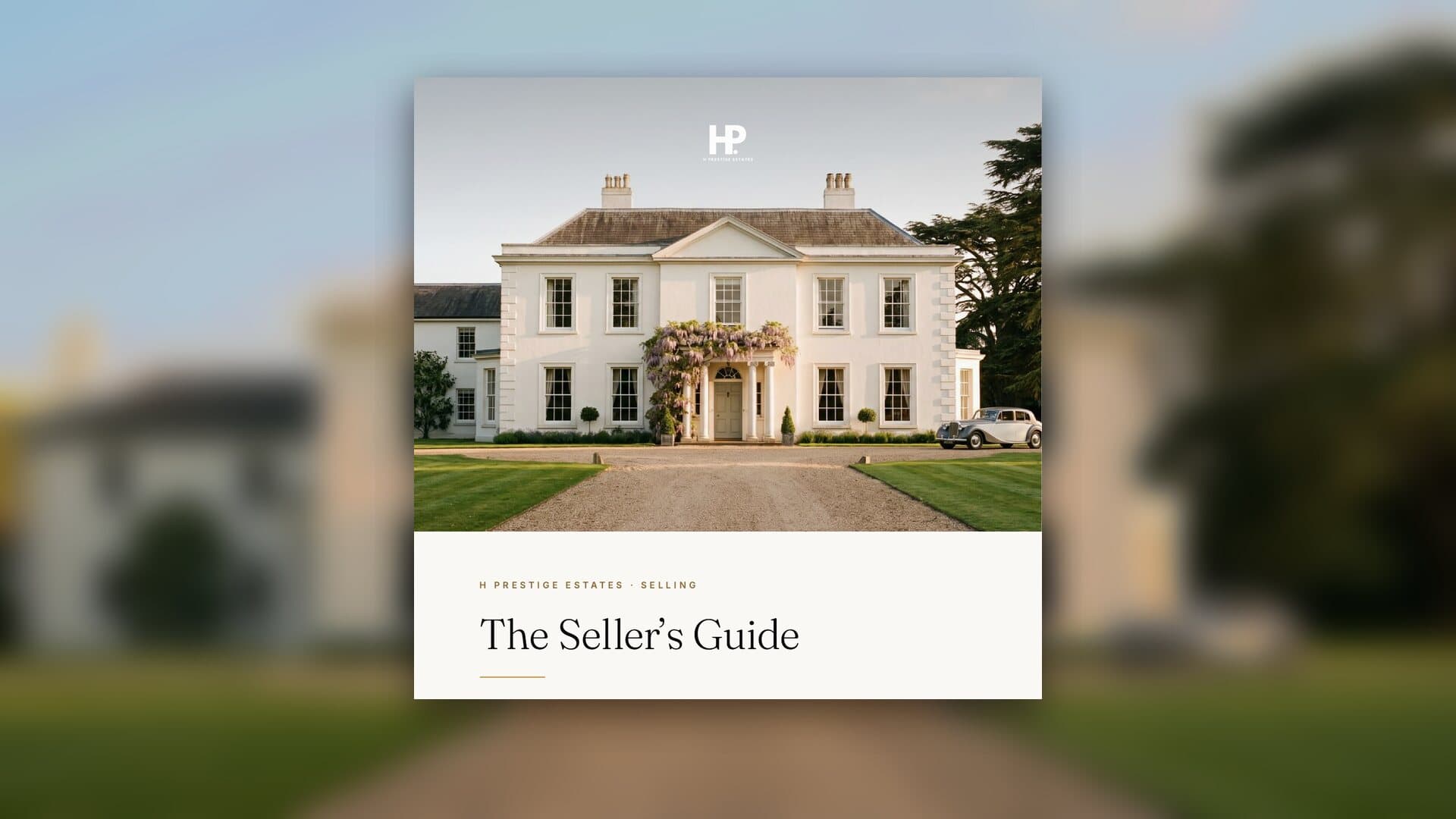
- A clear, chapter-by-chapter map of the whole selling process
- How we arrive at an accurate, evidence-based asking price
- A practical checklist for preparing and presenting your home
- What to expect from the first viewing through to completion
Prefer to talk it through? We will happily meet you at your home.
Common questions from sellers
Straight answers on timing, paperwork and how a sale actually runs.
It varies with the home, the price and the state of the market, but a well-prepared, accurately priced home in Ascot and the surrounding villages typically finds its buyer within the first few weeks of a considered launch. From an agreed sale, the legal process through to completion usually takes a further two to three months, longer where there is a chain or a leasehold interest. The single biggest lever on timing is an honest asking price from the start.
Gather proof of identity and address for the anti-money-laundering checks we are legally required to complete, your title deeds or lease, a valid Energy Performance Certificate, and the guarantees, certificates and planning or building-regulation paperwork for any works you have carried out. Having these ready before you accept an offer can take weeks off the back end of a sale.
Yes. A valid Energy Performance Certificate must be in place before your home is marketed, and one lasts ten years. If yours has lapsed we will arrange a new assessment for you. Many buyers now read the rating closely, so it is worth understanding where your home sits and which straightforward improvements would lift it.
Presentation matters far more than major works. Decluttering, fresh paintwork, attending to the small jobs and lifting the light in each room usually return more than the cost, and quickly. Large projects rarely repay their cost in a sale, so we would always talk them through with you before you spend, and advise on what genuinely moves the needle for your home and your buyer.
Once an offer is agreed we issue a memorandum of sale and the solicitors take over the legal work: draft contract, property information forms, buyer enquiries, searches, survey and mortgage offer. When everything is satisfied, contracts are exchanged, which makes the sale binding, and completion follows on the agreed date, when funds transfer and the keys change hands. Throughout, we stay across every party in the chain and keep you informed at each step.
Start with an honest valuation.
Whether you are months from moving or ready now, a conversation with our senior team is the best first step. Book a valuation, or get an instant online guide in a couple of minutes.